Leopard Gecko Care Hub
A quick species overview with lifespan, size, temperament, and the most important next steps.
Care guides for real enclosures
Start with a leopard gecko care plan, compare setup basics, and build toward a safe, low-stress reptile enclosure.
Leopard Gecko Guides is built for keepers who want a clear answer before they buy gear or bring a reptile home. Start with the leopard gecko hub, then move into the deeper setup, temperature, and beginner pages when you need details.
The site is organized around practical decisions: whether a leopard gecko fits your home, how to build the enclosure before purchase, where to place heat and probes, how feeding and supplements work, and when a symptom needs a reptile veterinarian instead of another forum opinion.
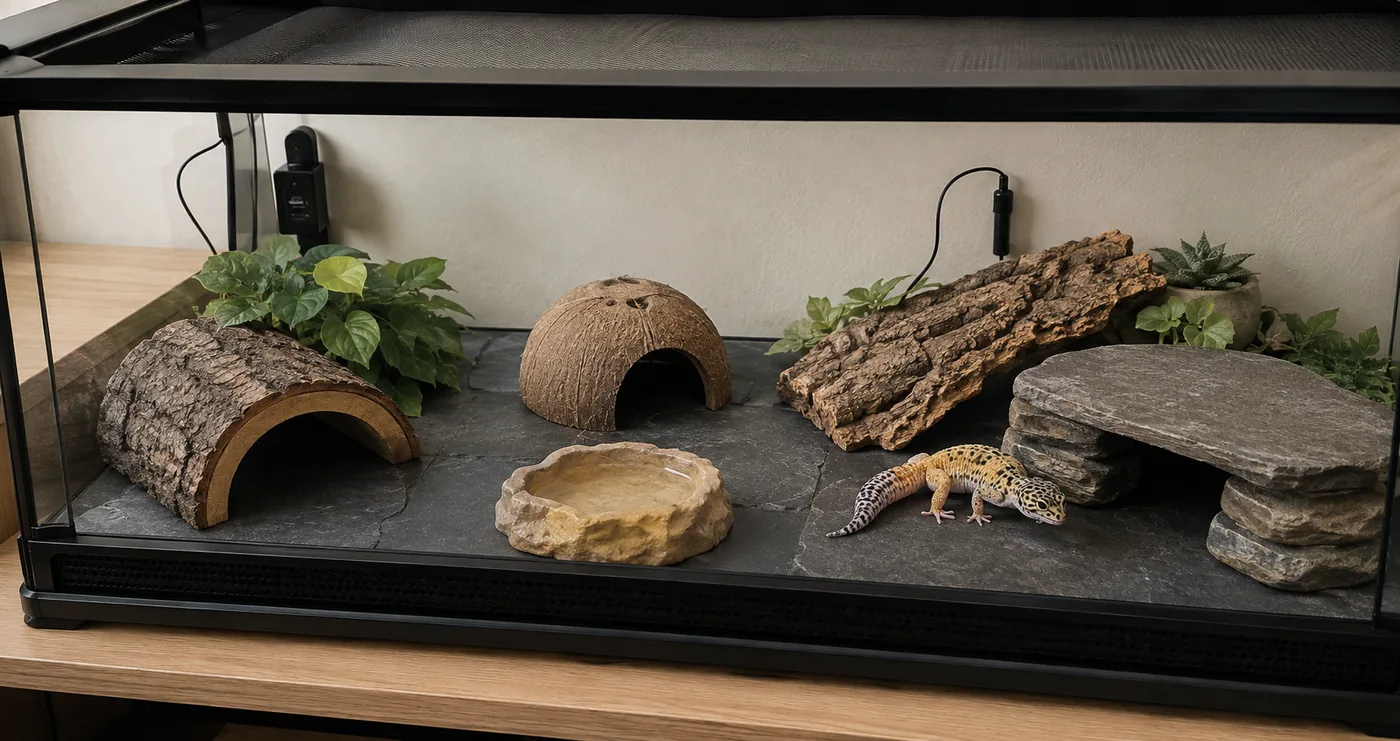
Reptile care is easier when the first decision is not “which pet looks interesting?” but “which animal can I house correctly for years?” Leopard geckos are a sensible starting point for many keepers because their needs are visible, measurable, and teachable: heat gradient, secure hides, live insects, supplements, and calm handling. This site uses that species as the anchor, then compares nearby beginner lizards where the care logic changes.
A quick species overview with lifespan, size, temperament, and the most important next steps.
The long-form guide covering housing, diet, heat, handling, health, and a starter equipment checklist.
A step-by-step enclosure build with hides, substrate, heat, measuring tools, and cleaning basics.
Buying checklist, startup cost, first-month routine, and mistakes to avoid before bringing one home.
Warm side, cool side, nighttime drops, humidity, thermometer placement, and troubleshooting.
Humid hide setup, normal shed rhythm, stuck shed risks, and when to call a reptile veterinarian.
Feeder insect rotation, gut-loading, dusting, portion control, and beginner feeding mistakes.
How to choose adult floor space, avoid cramped starter kits, and plan safe upgrade paths.
Daily observations, warning signs, prevention basics, and when a reptile veterinarian is needed.
A comparison point for keepers deciding between two popular beginner-friendly reptiles.
Good reptile care is not guessing by room temperature. Put one digital probe on the warm side, one on the cool side, and confirm the floor or basking surface with an infrared thermometer when possible.
A heat source without a thermostat is incomplete. A tank without hides creates stress. A feeder plan without calcium and variety leads to avoidable health problems.
A leopard gecko is a strong first reptile candidate when the keeper is comfortable with live insects, measured heat, quiet observation, and a long commitment. It is not the best choice for someone who wants a cuddly animal, a pet that is active all day, or a setup that can be guessed from room temperature. The right question is not whether leopard geckos are easy in a general sense. The right question is whether you can repeat the few important tasks every week for many years.
The core care pattern is simple once the enclosure is stable. Check water, waste, temperature readings, feeder intake, shed quality, and body condition. Keep the warm side and cool side available so the gecko can choose. Maintain a humid hide without making the entire tank damp. Feed appropriately sized insects and dust them with calcium or vitamins on a schedule that matches age, UVB exposure, and health. Those tasks are not difficult, but skipping them creates problems slowly.
Before buying, read the leopard gecko for beginners guide first. It covers the decision points that matter before the animal is in your house: startup budget, first-month routine, what a healthy juvenile looks like, and which shortcuts are most likely to cause stress or illness.
| Question | Leopard gecko | Blue tongue skink |
|---|---|---|
| Space | Ground-focused enclosure with warm, cool, and humid zones. | Much larger terrestrial enclosure with sturdy decor and more floor area. |
| Diet | Live feeder insects, gut-loading, calcium, and vitamin planning. | Omnivore meals with animal protein, greens, vegetables, and limited fruit. |
| Best fit | Keeper who wants a quieter insect-eating reptile with measured heat. | Keeper who wants a larger, more visible lizard and can handle more food prep. |
| Main risk | Bad heat measurement, poor supplementation, unsafe substrate, or too much early handling. | Undersized enclosure, wrong humidity for species, obesity, or unclear sourcing. |
Many attractive reptile setups online are second-stage projects. A new keeper benefits from a setup that is easy to inspect: solid substrate or paper towel, removable hides, a shallow water dish, visible probe positions, and enough cover that the gecko can move without feeling exposed. A plain quarantine-style setup is not a failure. It lets you see stool quality, appetite, shed problems, mites, and movement before you commit to a more complex display enclosure.
Once the gecko is eating, shedding, and holding weight, the enclosure can become richer. Add cork flats, low rocks, stable branches, background cover, and artificial or safe live plants. Make those upgrades one at a time. If feeding drops or hiding changes after an upgrade, you will know which change to review. Constant redesigns feel exciting to the keeper but remove the stable baseline the animal needs.
The tank setup guide walks through this build order. The temperature guide explains how to confirm that the finished layout actually gives safe choices.
Use the homepage as the map, not the final answer to every question. If you are deciding whether to buy, start with the beginner page. If the animal is already reserved, build the tank before pickup. If the tank is built but the gecko is hiding, not eating, or choosing one side constantly, check temperatures and probe placement before changing food or handling. If the gecko has weight loss, mouth issues, retained shed, swelling, injury, or breathing changes, use the health sections as a prompt to contact an exotic animal veterinarian, not as a replacement for diagnosis.
This structure matters because leopard gecko care problems often overlap. A feeding issue may be a heat issue. A shedding issue may be humidity, nutrition, or health. A stressed gecko may need more cover, less handling, different temperatures, or simply time to settle. Moving through the guides in order keeps troubleshooting calmer: setup first, measurements second, feeding and supplements third, behavior and health last.
If you only have time for one improvement today, choose the item that reduces risk the most. For most new keepers, that means verifying the thermostat and thermometer setup before buying more decor. Good measurements make every later decision easier.
These pages are written from common husbandry practice and cross-checked against veterinary, welfare, and specialist reptile-care references. Start with these sources when confirming a care decision.