Enclosure
Choose a front-opening terrarium or long glass tank with secure ventilation. A single adult leopard gecko should not be squeezed into a tiny starter kit.
A larger, gentle lizard with different needs
Blue tongue skink care guide covering enclosure size, diet, heat, humidity, temperament, health, and beginner setup planning.
Difficulty: moderate
| Adult size | Often around 18-24 inches depending on species and locality. |
|---|---|
| Enclosure | Larger floor space than a leopard gecko; plan adult housing from the start. |
| Diet | Omnivorous: animal protein, leafy greens, vegetables, and limited fruit. |
| Temperature | Warm gradient with a warmer basking area and cooler retreat. |
| Humidity | Species matters; Australian and Indonesian types can need different humidity ranges. |
Blue tongue skinks are often calm, visible, and rewarding, but they are not just oversized leopard geckos. They need more floor space, more food variety, and humidity planning based on species. Before buying one, identify whether you are looking at an Australian-type or Indonesian-type skink, because humidity and sourcing expectations can differ.
A blue tongue skink is a broad-bodied ground lizard that needs room to turn, burrow, and explore. Plan a large enclosure with secure ventilation, a deep enough substrate for natural behavior, a solid water dish, and multiple hides. Because they are stronger and heavier than leopard geckos, lightweight decor should be stable and safe.
Blue tongue skinks are omnivores. A balanced diet can include appropriate animal protein, leafy greens, vegetables, and small amounts of fruit. The exact ratio changes with age, species, and body condition. Avoid building the whole diet around fruit or one convenient protein source. Calcium and vitamin planning still matters, especially for growing animals.
Use a temperature gradient with a warm basking area and a cooler end. Veterinary and welfare care sheets commonly emphasize thermostats, guarded heat sources, and digital thermometers. Humidity is not one-size-fits-all: some blue tongue skinks do well in moderate humidity, while Indonesian species often need more moisture. If you cannot identify the species, pause before buying.
Blue tongue skinks are known for being steady and handleable, but they still need respect. Support the body fully, keep sessions short at first, and watch for hissing, puffing, tongue displays, or repeated attempts to escape. A skink that feels secure in its enclosure is usually easier to handle than one living in a bare or unstable setup.
Watch for wheezing, mouth discharge, stuck shed, mites, swelling, weight loss, or refusal to eat. Obesity can also become a problem because many skinks eat enthusiastically. Use a reptile veterinarian for persistent symptoms, and bring husbandry notes with temperatures, humidity, diet, and recent changes.
Choose a front-opening terrarium or long glass tank with secure ventilation. A single adult leopard gecko should not be squeezed into a tiny starter kit.
Use a thermostat with any heat mat, ceramic emitter, or heat lamp. This is the safety item that prevents overheated surfaces.
Use probes or an infrared temperature gun to read the warm side, cool side, and surface temperature. Skip stick-on dials for setup decisions.
Plan for three hides: warm, cool, and humid. The humid hide is a simple way to support clean shedding.
Paper towel, tile, and reptile-safe liner are easy beginner choices. Avoid loose sand for juveniles and any setup where food is likely to be swallowed with substrate.
Keep plain calcium, calcium with D3 if needed, and a reptile multivitamin. Match the schedule to UVB exposure and your veterinarian’s advice.
Leopard geckos can live without strong lighting, but many modern keepers provide low-output UVB for a more complete day-night environment.
Use reptile-safe disinfectant, paper towels, feeding tongs, and a dedicated waste scoop so cleaning stays routine.
Product availability, exact dimensions, and seller quality change. Use this checklist to compare current listings before buying.
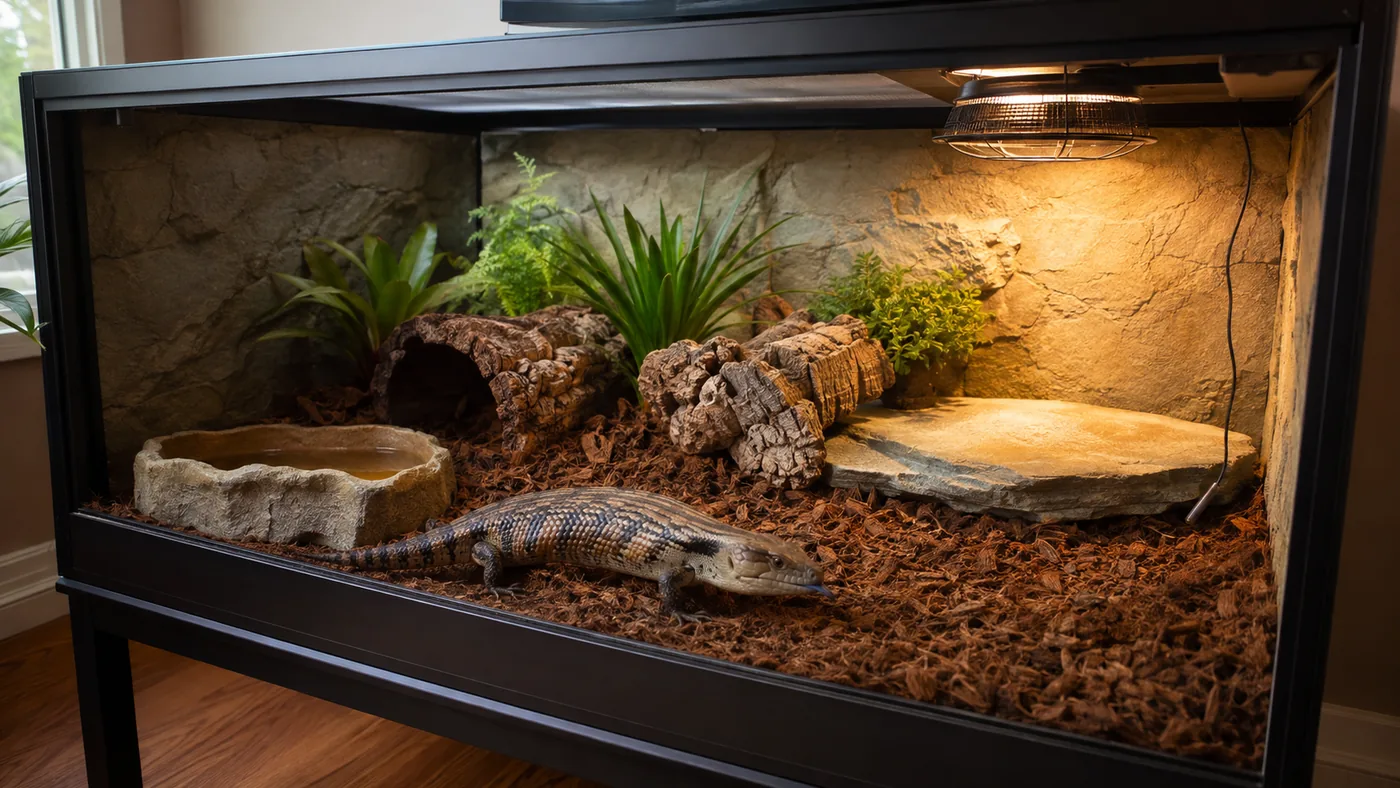
Blue tongue skink care starts with identification. Northern, eastern, Indonesian, Merauke, and other blue tongue skinks can look similar to beginners, but their humidity expectations and adult size can differ. A care sheet that works for one type may be too dry, too damp, or too small for another. Before buying, ask for the species, locality if known, captive-bred status, age, feeding history, and current enclosure conditions.
This matters for ethics as well as care. Captive-bred Australian-type skinks and imported Indonesian-type skinks often come through different supply chains. A beginner should prefer a seller who can explain origin, health checks, feeding, shed history, and current setup. If the seller cannot identify the animal beyond “blue tongue,” do not build the whole purchase around that seller’s advice.
A blue tongue skink needs more floor space than a leopard gecko. It is heavier, stronger, and more likely to bulldoze light decor. Plan an adult enclosure with enough depth for a meaningful temperature gradient, a large hide or covered retreat, a stable basking area, and open floor for movement. The enclosure should be escape-resistant because skinks can push, wedge, and dig with surprising strength.
Substrate should support the species’ humidity needs and natural behavior. Aspen, cypress, soil mixes, coconut products, or other reptile-safe substrates may be used differently depending on the species and climate. The goal is not just a pretty floor; it is a surface that holds appropriate moisture, allows some digging, stays clean, and does not create dust or mold. Spot clean often and replace substrate before odor or waste buildup becomes normal.
Blue tongue skinks are enthusiastic eaters, which is both helpful and dangerous. A balanced diet typically includes animal protein, leafy greens, vegetables, and occasional fruit. Dog food is sometimes discussed in skink communities, but quality, ingredients, fat content, and frequency matter. Treat it as one possible tool within a researched diet, not a reason to stop offering varied whole foods.
Chop food to a manageable size and mix ingredients so the skink cannot always select only fruit or protein. Rotate greens and vegetables, use calcium and vitamins appropriately, and watch body condition. A skink that eats eagerly can still become obese or nutritionally imbalanced. Juveniles and adults need different feeding frequency and ratios, so update the plan as the animal grows.
A skink enclosure needs a stronger, more carefully guarded heat plan than a small gecko tank. Use a thermostat, measure basking surfaces, and leave a cooler end that remains usable. Overhead heat is common because skinks are heavy-bodied surface baskers, but fixture distance and guarding matter. Low to moderate UVB is commonly used by many keepers, especially when the animal can self-regulate exposure with hides and shaded areas.
Humidity should follow species needs, not generic lizard advice. Some blue tongue skinks develop shedding and respiratory problems when kept too dry or too damp for their type. Track humidity with a reliable digital gauge, but also watch the animal: stuck shed, noisy breathing, damp bedding, mold, and repeated soaking behavior are all signs to review the setup.
Blue tongue skinks often become calm display animals, but trust is built through support and routine. Lift with two hands, support the body and feet, and keep early handling low to the ground. Hissing, puffing, flattening, gaping, or repeated escape attempts mean the session should end. A secure enclosure with hides and predictable feeding usually produces better handling than frequent forced interaction.
Because skinks are sturdy-looking, beginners sometimes miss early illness. Watch weight, breathing, eyes, mouth, skin, toes, stool, and appetite. Bring a stool sample to a reptile veterinarian if parasites are suspected, especially with imported animals. Keep notes on temperatures, humidity, diet, supplements, and sheds. Those details make vet care faster and more accurate.
The same husbandry logic carries across species: measure heat, provide secure hides, choose substrate by animal and age, and plan diet before buying. The details are different, though. A skink is larger, omnivorous, and more humidity-sensitive by species. A leopard gecko is smaller, insectivorous, and easier to house in a dry setup with a humid hide. Use the leopard gecko care guide as a comparison point, not as a skink care sheet.
A workable weekly rhythm keeps care from drifting. Check temperatures and humidity daily, refresh water, remove waste, and watch breathing and movement. Several times per week, prepare balanced meals, remove leftovers, and wipe feeding surfaces. Weekly, inspect toes, tail, eyes, mouth edges, substrate condition, and body shape. Monthly, weigh the skink and review whether diet or enclosure conditions need adjustment.
If the skink sheds in patches, review humidity and rough surfaces. If it soaks constantly, check whether the enclosure is too hot, too dry, or irritating. If it refuses vegetables, chop smaller, mix better, and vary ingredients before assuming it is just picky. If appetite drops suddenly, compare diet, temperatures, season, shed cycle, and stress before guessing.
A good skink keeper also plans for size. Bowls, hides, tunnels, and basking areas that fit a juvenile may become cramped as the animal grows. Check whether the skink can turn around inside hides, bask without hanging off the platform, and move without scraping its back on decor. Growth is not only a feeding issue; it changes the whole enclosure.
Because blue tongue skinks live close to the ground, cleanliness affects skin and breathing. Remove wet food quickly, keep the water bowl from soaking the substrate, and watch for mold under decor. The enclosure should smell like clean substrate, not old produce or damp waste.
If you are comparing skinks with leopard geckos, choose by care fit rather than novelty. The skink is more visible and substantial, but it asks for more space, more food prep, and more humidity awareness.
That extra work can be worth it for the right keeper. The point is to choose the animal whose adult care you can repeat calmly, not the one that looks easiest in a short video. If the enclosure, diet, and humidity plan already feel like too much, start with the simpler species. A patient decision before purchase is better than rehoming a stressed animal later because the adult setup became unrealistic. Match the pet to your real weekly routine.
These pages are written from common husbandry practice and cross-checked against veterinary, welfare, and specialist reptile-care references. Start with these sources when confirming a care decision.