Can a leopard gecko live in a tiny starter tank?
A small temporary setup can be useful for quarantine, but an adult needs enough floor space for a real warm side, cool side, hides, and maintenance access.
Floor space, layout depth, and adult housing
Leopard gecko tank size and enclosure size guide covering adult terrarium planning, floor space, juvenile upgrades, warm and cool zones, hides, and layout mistakes.
Priority: usable floor space, not tall empty height
| Main need | Leopard geckos are ground-oriented, so floor space matters more than vertical height. |
|---|---|
| Adult plan | Buy or plan the adult enclosure early so warm, cool, and humid zones all fit. |
| Minimum thinking | A tank that only fits the animal is too small if it cannot fit hides, heat, water, and a gradient. |
| Upgrade sign | Upgrade when the gecko has no true cool side, hides overlap, or maintenance is cramped. |
| Layout | Put heat on one side only, then build secure paths between warm, cool, and humid areas. |
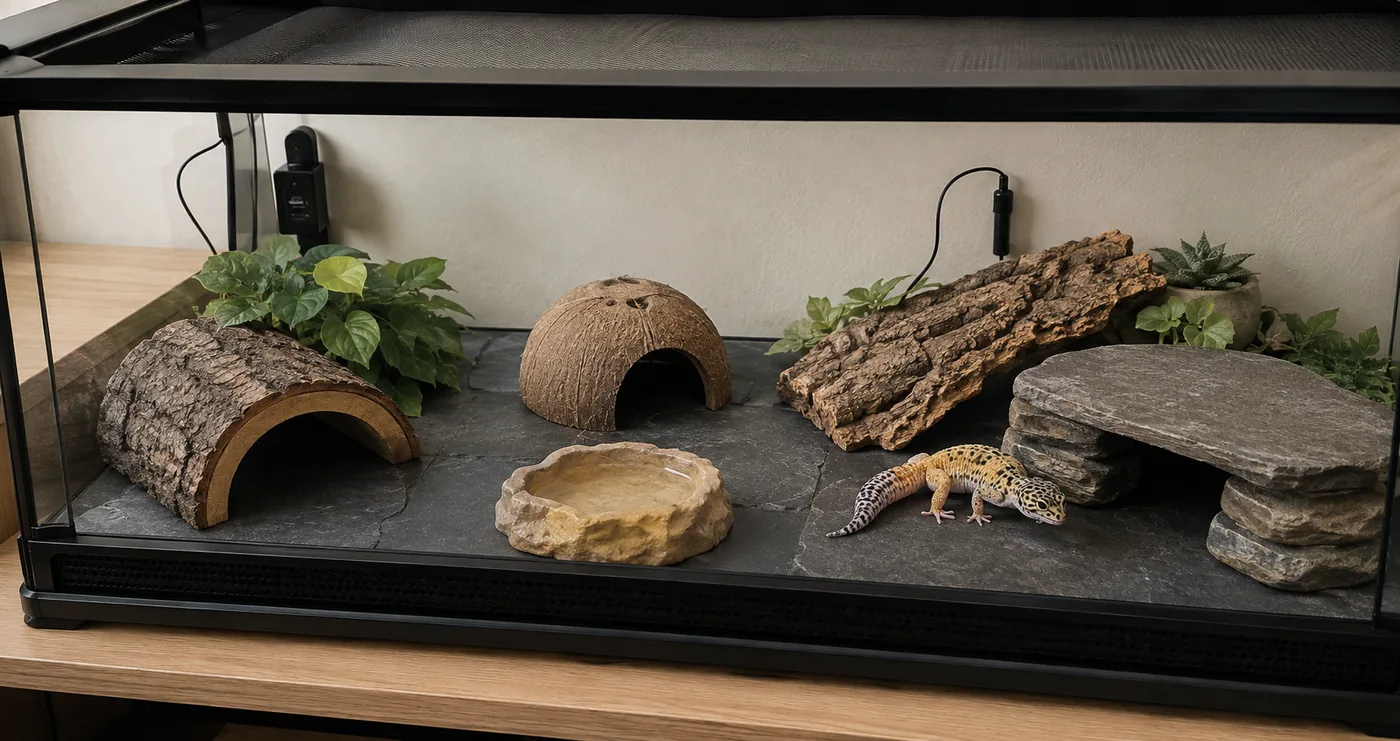
Leopard gecko enclosure size is not only a number printed on a tank box. The useful question is whether the animal can make choices inside the space. A proper enclosure needs a warm side, a cooler side, a warm hide, a cool hide, a humid hide, water, safe substrate, measuring tools, and enough cover that moving between zones does not feel exposed. A tank that technically fits the gecko’s body can still be too small for good husbandry.
Because leopard geckos are ground-oriented, floor space matters more than tall empty height. They may climb low rocks, cork, or background texture, but they are not arboreal display lizards. A taller tank can still be useful if it gives safe fixture distance, ventilation, and enrichment, but height does not replace a long footprint.
For an adult leopard gecko, plan the enclosure around usable floor area, not a bare gallon label. The tank should fit a warm hide, cool hide, humid hide, water, probes, and enough covered travel space that the animal can move between zones without being exposed the whole time. Many modern keepers choose an adult footprint closer to a long 40-gallon-breeder-style enclosure or a similarly roomy front-opening terrarium, then verify the actual length and depth before buying.
A smaller temporary or quarantine setup can be useful for observation, especially with a juvenile or new arrival, but it should not become the permanent adult plan. If you cannot create a true cool side, the hides touch each other, or every cleaning task requires tearing the setup apart, the enclosure is functionally too small. When comparing terrariums, sketch the inside layout first. The right size is the one that makes the heat gradient, hides, feeding area, and maintenance routine work together.
Tiny starter kits look convenient because they bundle pieces together, but they often make the most important parts of care harder. The warm hide may sit too close to the cool hide. The water dish may end up in the wrong place because there is nowhere else to put it. The humid hide may become the only secure hide. A heat source may warm too much of the floor, leaving no true cool retreat. Those problems are not cosmetic; they remove the gecko’s ability to self-regulate.
A juvenile can live in a simpler setup while you monitor feeding, waste, and growth, but that does not mean the adult enclosure should be an afterthought. Many keepers save money by planning adult housing from the beginning. If you start with a smaller quarantine setup, treat it as temporary and keep the adult layout in mind. The upgrade should happen before the animal outgrows the space or before temperature zones become impossible to separate.
For most leopard gecko setups, a long rectangular footprint is easier to use than a tall narrow footprint. The long shape lets you create a gradient from warm to cool. It gives hides separation. It leaves room for low enrichment without stacking heavy objects dangerously. If a tank is tall, use the height carefully: safe fixture distance, background cover, and low stable climbing surfaces. Do not build a cliff-like enclosure where a heavy-bodied gecko can fall onto hard decor.
Size does not work alone. A tank in direct sun can overheat even if it is large. A tank beside an air conditioner, heater, exterior door, or drafty window can swing more than expected. Ventilation should prevent stale damp air, but extreme airflow in a cold room can make heat difficult to maintain. Place the enclosure, install the equipment, then run it empty and measure before the animal moves in. The temperature guide explains how to read those zones without guessing.
Upgrade when the gecko cannot move between hides without exposure, when the cool side is not truly cool, when the humid hide makes the whole enclosure damp, when cleaning requires tearing apart the whole habitat, or when the animal’s body size makes hides and paths cramped. Upgrade also makes sense when you are ready to move from a quarantine layout to a richer adult display. The goal is not a bigger box for its own sake; it is a more stable and serviceable environment.
Do not judge an enclosure listing only by gallons or marketing language. Look for the actual length, depth, and access. A long front-opening enclosure is often easier to service than a narrow top-opening tank because you can reach hides, bowls, and probes without startling the animal from above every time. Check lid security, ventilation, cable routing, and whether the doors can be locked or clipped. Escape prevention is part of size planning because a stressed or exploring gecko can find surprising gaps.
Think through the inside before you buy. Sketch where the warm hide, cool hide, humid hide, water, and probes will go. If the drawing already feels crowded, the tank will feel worse once real decor is inside. Product photos often show sparse display layouts that look clean but do not provide enough secure cover. A good leopard gecko enclosure usually looks more covered than a showroom tank because the animal benefits from hidden routes.
Loose or naturalistic substrate needs more planning than paper towel or tile. It can change surface temperatures, hold moisture, hide waste, and make feeder tracking harder. In a cramped tank, those problems stack quickly. A larger, better-planned enclosure gives you more control: feeding area, humid zone, dry retreat, digging area if appropriate, and easier access for spot cleaning. Start simple if you are new, then upgrade after feeding, shedding, and temperature records are stable.
Choose the enclosure footprint first, then decide where heat will live. Add the warm hide, cool hide, and humid hide before decorative clutter. Place water where it is easy to clean and not constantly heated. Add probes and run the setup empty. Only after readings are stable should you add extra cork, plants, background cover, or display elements. The tank setup guide goes through the physical build, while the complete care guide connects housing with feeding, handling, and health. Photograph the final layout and save the thermostat setting so future troubleshooting starts from a known working baseline. That record also helps if another keeper cares for the animal.
A tank that looks large can still be hard to use if every object blocks access. You should be able to remove the water dish, refresh the humid hide, check under hides, clean waste, secure probes, and catch a loose feeder without dismantling the whole habitat. Maintenance access matters because the tasks you can do easily are the tasks you will keep doing. If cleaning requires a full rebuild, small problems will be easier to postpone.
Plan a calm route for handling and health checks too. A front-opening enclosure with stable decor lets the gecko retreat without being chased around open glass. Heavy rocks should sit directly on the tank floor or be secured so digging cannot collapse them. Branches and cork should create cover, not unstable piles. The enclosure is successful when it is safe for the gecko and convenient enough that the keeper can maintain it consistently.
A small temporary setup can be useful for quarantine, but an adult needs enough floor space for a real warm side, cool side, hides, and maintenance access.
Some height helps with safe lighting and enrichment, but floor space is the priority for leopard geckos.
Often yes. Planning adult housing early avoids rushed upgrades and makes the temperature gradient easier to build.
Move it away from sun and heat sources, review ventilation, lower the thermostat setting, and remeasure before the gecko uses the enclosure.
These pages are written from common husbandry practice and cross-checked against veterinary, welfare, and specialist reptile-care references. Start with these sources when confirming a care decision.