Complete care guide
Housing, feeding, handling, health, and long-term care in one page.
Beginner-friendly reptile
A leopard gecko care hub with lifespan, size, setup basics, temperature ranges, and links to deeper care pages.
Difficulty: low to moderate
| Adult size | About 7-10 inches, with females often smaller than males. |
|---|---|
| Lifespan | Often 10-20 years in captivity with consistent husbandry. |
| Origin | Dry grassland and rocky regions across parts of Afghanistan, Pakistan, northwestern India, and nearby areas. |
| Temperament | Usually calm when handled gently and given time to settle. |
| Core setup | Long enclosure, warm side, cool side, three hides, calcium, and measured temperatures. |
Leopard geckos are popular because they stay a manageable size, eat readily, and do not require a tall tropical enclosure. They are crepuscular to nocturnal, spend much of the day hidden, and usually tolerate calm handling once they learn that hands are not a threat. That does not make them disposable starter pets. Their long lifespan means a new keeper is taking on a reptile that may live through school, moves, jobs, and changing routines.
Set up the enclosure before the animal arrives. Provide a warm side and a cool side so the gecko can move between temperatures. Keep humidity generally dry, but always include a humid hide for shedding. Feed appropriately sized insects, dust feeders with calcium, and avoid housing multiple leopard geckos together unless you have advanced experience and a clear reason.
Housing, feeding, handling, health, and long-term care in one page.
Build the enclosure in the right order and avoid the most common gear mistakes.
Understand warm side, cool side, nighttime drops, and measuring tools.
Costs, time commitment, buying checklist, and first-month mistakes.
Set up the humid hide, spot retained shed, and understand normal shed behavior.
Compare feeder insects, dusting, gut-loading, and feeding routines by age.
Choose floor space, layout depth, and upgrade timing for juveniles and adults.
Track normal signs, spot warning changes, and prepare useful information for a reptile veterinarian.
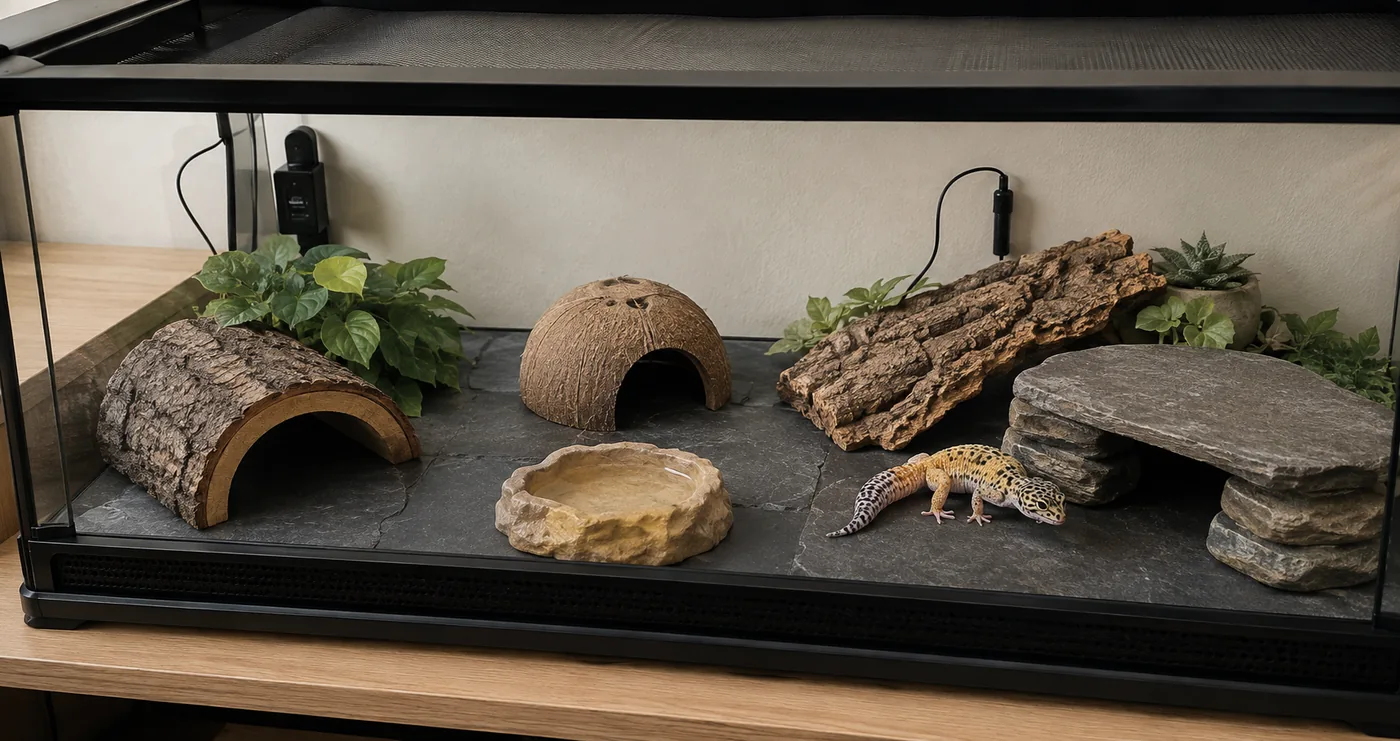
If you are deciding whether to buy, start with the beginner guide. If the animal is already coming home, build the enclosure with the tank setup guide first, then tune the heat using the temperature guide. The full care guide ties those steps together with feeding, supplements, handling, and health checks.
These pages are written from common husbandry practice and cross-checked against veterinary, welfare, and specialist reptile-care references. Start with these sources when confirming a care decision.