Do leopard geckos eat their shed?
Yes, many do. Not finding shed skin is common and is not automatically a problem.
Humid hide, stuck shed, and routine checks
Leopard gecko shedding guide covering normal shed behavior, humid hide setup, stuck shed around toes and eyes, safe support, and when to call a reptile veterinarian.
Key idea: support the shed, do not pull it
| Normal behavior | Many leopard geckos hide more, look dull or pale, then eat the shed skin. |
|---|---|
| Humid hide | Keep one clean humid hide available at all times, not only after shed trouble starts. |
| High-risk areas | Check toes, tail tip, eyes, mouth edges, and the vent after each shed. |
| Do not do | Do not pull dry stuck shed by force or turn the whole enclosure wet. |
| Vet care | Use a reptile veterinarian for repeated stuck shed, eye issues, wounds, swelling, or poor body condition. |
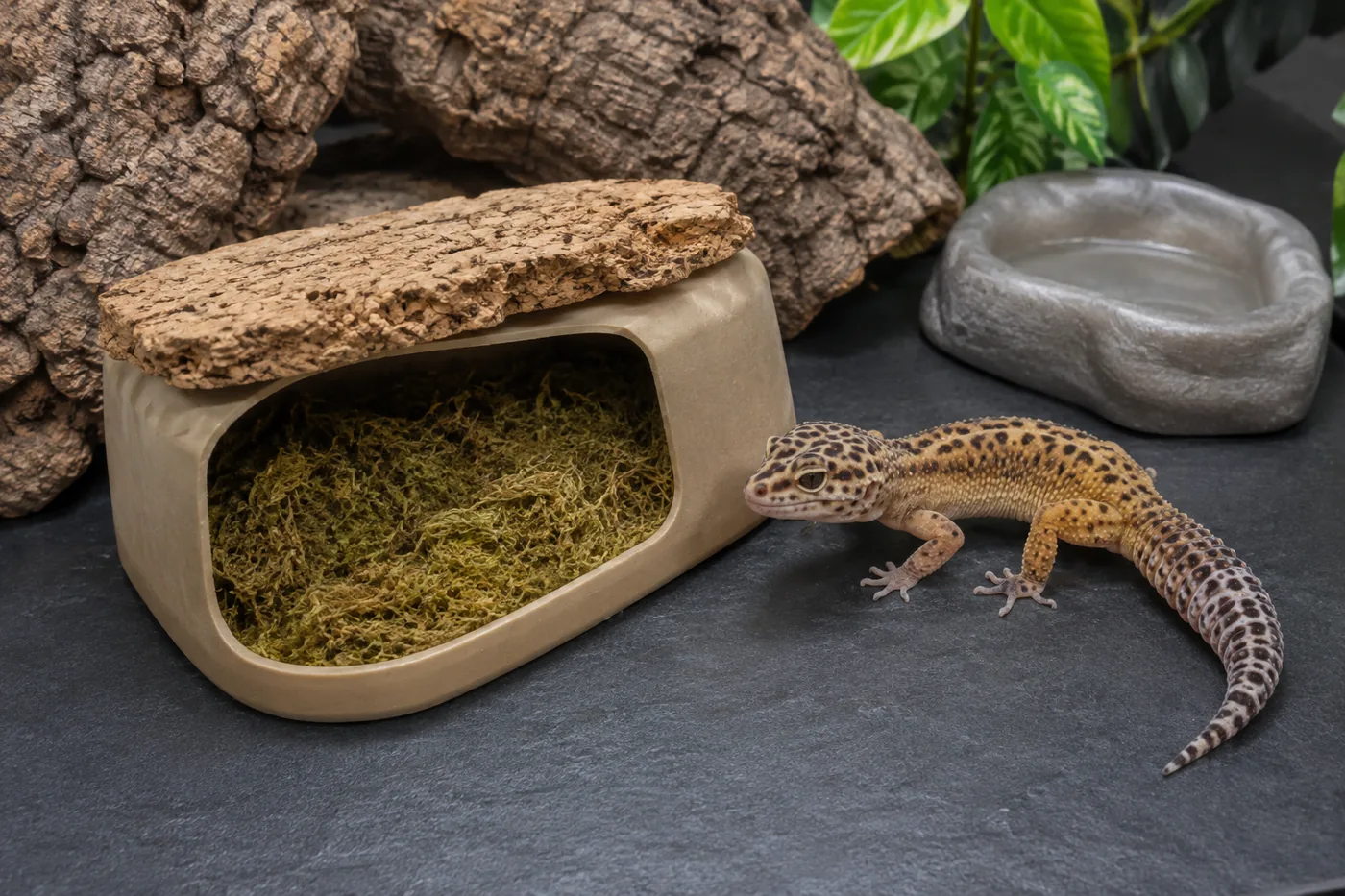
Leopard gecko shedding is normal, but it is also one of the easiest places for a beginner to miss a husbandry problem. A healthy shed may look uneventful: the gecko becomes dull or pale, hides more than usual, sheds, and then eats the shed skin. That last part can surprise new keepers, but it is common. The problem is not that the gecko sheds; the problem is old skin that stays tight around delicate areas.
Retained shed can constrict toes, irritate eyes, trap around the tail tip, or collect near the mouth and vent. A single small patch may be manageable with better humidity support, but repeated stuck shed is a signal to review the enclosure, diet, hydration, supplements, and overall health. Treat shedding as a routine check, not as an emergency you only notice after toes look damaged.
Before a shed, the skin often looks dusty, gray, or pale. The gecko may hide, refuse a meal, or become less interested in handling. After the shed, the color usually looks cleaner and brighter. Because many leopard geckos eat their shed skin, you may never find a full piece in the enclosure. That does not automatically mean something is wrong. The useful check is whether the toes, eyes, tail tip, mouth edges, and vent are clear afterward.
A humid hide is a small covered space with a damp but clean material inside. Damp paper towel is simple and easy to replace. Sphagnum moss can work when kept clean and not waterlogged. Place the humid hide where it stays comfortably warm enough to be used but not so hot that it dries immediately. Many keepers use a middle-to-warm position so the gecko can choose it during shed without being forced into the hottest part of the tank.
Leopard geckos are often kept with relatively dry ambient humidity, but they still need a moist microclimate. The mistake is trying to fix shedding by making the entire tank damp. Wet substrate, stale air, moldy moss, and dirty hides can create new problems. Keep the main enclosure well ventilated and generally dry, then maintain the humid hide as a clean tool. This is why the tank setup guide treats the humid hide as a standard hide, not an optional accessory.
If a small patch remains, first review the humid hide. Refresh the damp material, confirm the hide is easy to enter, and give the gecko time. Some keepers use a short supervised soak or a damp cotton swab for minor stuck shed, but the goal is gentle softening, not peeling. Pulling dry shed can tear skin or damage toes. If the skin is tight, inflamed, close to the eye, or not improving, stop handling the area and contact a reptile veterinarian.
Stuck shed can come from low humidity support, a missing or dirty humid hide, dehydration, poor nutrition, incorrect temperatures, illness, old injuries, or rough shed surfaces that are missing from the enclosure. Young geckos may shed frequently as they grow, so poor shed support can create repeated small injuries. Adults may shed less often, which makes it easier to forget routine checks. Keep shed dates in the same notes where you track feeding, weight, and equipment changes.
A shedding problem is not always only a humidity problem. A gecko kept too cool may digest poorly, feed less, and have weaker overall condition. A gecko with poor calcium, vitamin, or feeder variety may not maintain skin and body condition as well. Use the temperature guide to confirm the enclosure gives safe choices, then review the food and diet guide if body condition or feeding is drifting.
Start with the least invasive checks. First, look at the humid hide: is it present, easy to enter, clean, and damp rather than dry or soggy? Second, compare where it sits in the enclosure. If it is on the coldest end, the gecko may avoid it. If it is directly over strong heat, it may dry too quickly. Third, check whether the rest of the enclosure has rough but safe surfaces, such as cork or textured hides, that help loosen skin naturally.
Next, review the last two weeks of care. A missed meal, new enclosure, low temperatures, dehydration, or stressful handling can all show up around shed time. If the gecko has just arrived, avoid repeated handling attempts and focus on quiet observation. If the animal is an adult that suddenly has repeated stuck shed after months of normal sheds, treat that as a change worth investigating, not as a random annoyance.
Finally, decide whether the problem is small and external or close to sensitive tissue. A little loose skin on the body is different from a tight ring around toes or material around the eye. The closer the stuck shed is to circulation, vision, breathing, eating, or damaged skin, the faster you should involve a reptile veterinarian.
A short shed log helps because problems rarely start with one dramatic event. Note the date, whether the gecko ate before or after shedding, whether the shed came off cleanly, and whether any toes or tail tip needed attention. Add a quick weight check if you already weigh monthly. Over time, the pattern tells you whether the animal is improving, staying stable, or developing a repeated issue.
Photos can help too. A clear picture of the humid hide, the shed problem, and the whole enclosure gives a veterinarian or experienced keeper more context than a description like “humidity is fine.” Do not rely on one dial reading if the hide itself is dry. The animal experiences the microclimate inside the hide, not just the average air in the tank.
Call a reptile veterinarian if retained shed affects the eyes, if toes look swollen or dark, if skin is cutting into tissue, if the gecko has wounds, if stuck shed repeats despite correct husbandry, or if shed problems appear with weight loss, lethargy, tremors, mouth issues, or appetite loss. Bring enclosure photos, temperature readings, humidity notes, diet, supplement schedule, and shed history. Those details help the vet separate a simple husbandry correction from infection, injury, parasites, or metabolic disease. If you are unsure whether a toe or eye is involved, treat it as sensitive tissue and get professional help sooner. Early help is usually safer than repeated home attempts.
Yes, many do. Not finding shed skin is common and is not automatically a problem.
Usually no. Keep the enclosure generally dry and ventilated, then provide a clean humid hide.
Do not pull dry stuck shed by force. Soften gently and use a reptile veterinarian when skin is tight, irritated, or persistent.
Young geckos shed more often than adults. Track your animal’s pattern rather than chasing one exact interval.
These pages are written from common husbandry practice and cross-checked against veterinary, welfare, and specialist reptile-care references. Start with these sources when confirming a care decision.