Education only: visible symptoms need a qualified reptile veterinarian
Quick Reference
Daily checks
Look at breathing, posture, eyes, skin, movement, water, waste, and access to the warm and cool zones.
Healthy baseline
Clear eyes, intact skin, steady movement, regular appetite, a well-filled tail, and normal droppings for that gecko.
Record first
Write down weight, food, temperatures, humidity, sheds, stool changes, and recent enclosure changes.
Urgent signs
Open-mouth breathing, severe weakness, swelling, wounds, tremors, inability to walk, or rapid weight loss need prompt veterinary advice.
Do not diagnose
Several illnesses share the same signs. Do not use a forum post or home remedy as a substitute for examination and testing.
Health starts with a baseline
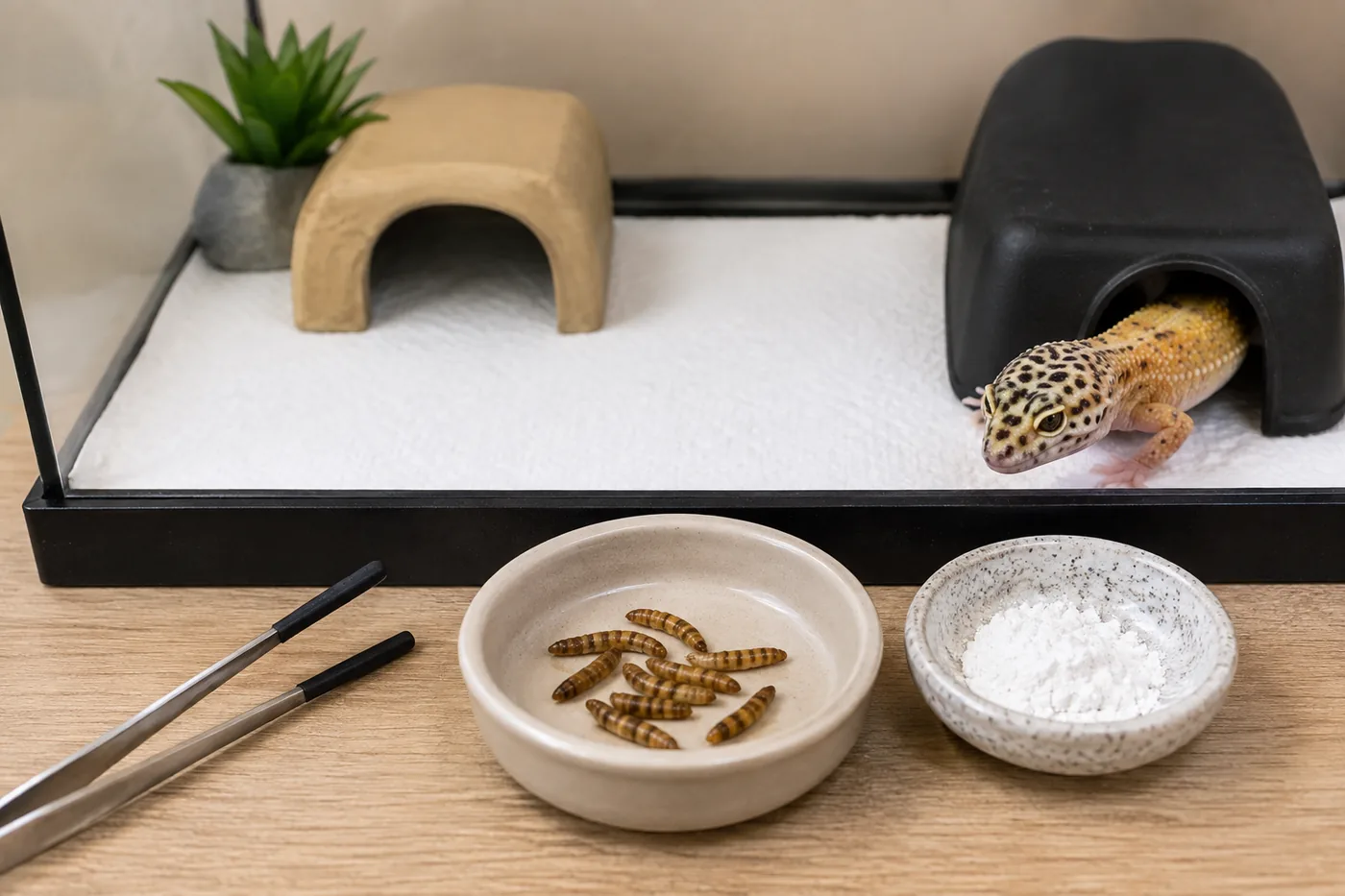
A simple observation and feeding setup makes it easier to track appetite, supplements, and body condition.
A health check is most useful when you know what normal looks like for your individual leopard gecko. During a calm routine, notice how it walks, rests, breathes, uses its hides, responds to food, and passes waste. Look at the eyes, mouth edges, toes, tail, vent, and skin without repeatedly picking the animal up. A quiet record made over time is more useful than a single anxious glance after a gecko hides for one afternoon.
Young geckos, newly relocated geckos, animals in shed, and geckos affected by seasonal changes may behave differently from an established adult. That does not mean every change is harmless. It means the keeper should compare several observations: appetite, weight, stool, activity, temperature readings, and recent stress. If several signals move in the wrong direction together, contact a veterinarian early.
What a healthy leopard gecko can look like
Healthy appearance is not a beauty contest and should not be judged by color alone. Clear eyes, intact skin, a clean vent, steady posture, and smooth movement are useful everyday signs. A well-fed gecko usually carries a substantial tail, but tail size varies by age, genetics, feeding history, and body condition. The animal should be able to move between its warm and cool areas and should not constantly drag its belly or avoid using one side because of pain.
Weight, appetite, and body condition
A small gram scale is one of the most useful health tools for a keeper. Weigh a settled gecko at a consistent time and record the date, weight, recent shed, feeding pattern, and any major enclosure change. A single number is not a diagnosis. A trend is more informative: gradual growth in a juvenile, stable condition in an adult, or a sustained decline that deserves investigation. Handle gently and keep the scale routine short.
Appetite also needs context. A gecko may eat less during relocation, shedding, seasonal slowdown, or after being overfed. It may refuse food because temperatures are wrong, the enclosure is exposed, prey is poorly sized, or illness is developing. Measure the warm and cool zones first, check whether the humid hide is usable, and remove uneaten insects. If reduced appetite comes with weight loss, lethargy, abnormal stool, sunken eyes, weakness, or a thin tail, arrange veterinary care rather than repeatedly changing feeders.
Eyes, mouth, skin, and toes
Inspect visible areas during routine cleaning or a calm handling session. Eyes should not be swollen, stuck shut, cloudy from a non-shed problem, or coated with discharge. The mouth should not have persistent mucus, bleeding, swelling, foul material, or ulcers. Skin should be intact without unexplained sores, spreading redness, parasites, or repeated retained shed. Check toes and tail tip for old skin that is tightening around tissue. Never pull stuck shed forcefully; damaged skin can worsen the problem.
Breathing and movement warning signs
Breathing should not look like repeated straining, open-mouth gasping, clicking, or discharge from the nose or mouth. A gecko that cannot walk normally, repeatedly tips over, trembles, drags a limb, shows a soft or distorted jaw, or cannot hold its posture needs prompt veterinary advice. Weakness can be related to nutrition, temperature, injury, infection, or another condition that cannot be separated safely from a description alone. Do not wait for a dramatic collapse before calling a reptile veterinarian.
Droppings and digestive changes
Normal droppings vary with diet and schedule, but they are still useful records. Note the amount, color, firmness, urate portion, smell, and frequency for your gecko. Diarrhea, blood, repeated regurgitation, persistent constipation, unusual mucus, or a sudden change alongside weight loss should be treated as a health concern. Photograph an abnormal dropping with a date and keep a fresh sample if the clinic asks for one. A sample can help a veterinarian decide whether fecal testing is appropriate.
Do not assume a digestive problem is impaction or a parasite from appearance alone. The same outward sign can have multiple causes, including diet, dehydration, incorrect temperatures, stress, infection, or an obstruction. Avoid mineral oil, force-feeding, antibiotics, or human medicines unless a qualified veterinarian has given specific instructions for this animal. Home treatment can delay diagnosis and create additional risk.
Metabolic bone disease and nutrition risks
Calcium, vitamin D3, UVB exposure, prey quality, and feeding routine work together. Problems can develop when a gecko receives poor supplementation, unsuitable lighting, an imbalanced diet, or inconsistent care. Warning signs can include tremors, weakness, soft or swollen limbs, difficulty walking, jaw changes, or poor growth. These signs require veterinary attention. Prevention starts with a measured heat setup, an appropriate feeder rotation, a supplement plan that matches the lighting arrangement, and regular review rather than adding unlimited powder whenever a concern appears.
Shedding problems are health information
A humid hide supports normal shedding, but it does not make every retained piece safe to ignore. Check toes, tail tip, eyes, and the skin around the mouth after a shed. Tight retained skin can restrict circulation, especially on toes. Keep the hide clean and usable, maintain the rest of the enclosure according to the species, and avoid peeling dry skin away by force. If shed remains attached, the area swells, tissue changes color, or the problem keeps recurring, call a reptile veterinarian. Use the shedding guide for the setup and first-response checklist.
Prevention through enclosure routine
Many health risks are reduced by a repeatable enclosure routine. Verify thermostat and thermometer readings, refresh clean water, spot-clean waste, inspect the humid hide, remove uneaten feeders, and check that hides and decor have not shifted. Wash hands before and after handling the gecko or its equipment. Keep tools separate if you house multiple reptiles, and isolate a new or sick animal according to veterinary guidance. A clean record of temperatures, food, weight, shed, and stool gives the clinic useful context if a problem appears.
Do not rebuild the entire enclosure every time the gecko hides. Frequent changes can create stress and make it difficult to identify what caused a change. Correct one measurable issue at a time, then observe. The temperature guide covers probe placement and gradients; the food and diet list covers feeder variety and supplement planning.
When to contact a reptile veterinarian
Breathing looks labored, the mouth stays open, or there is discharge from the nose or mouth.
The gecko cannot walk, has repeated tremors, shows severe weakness, or has an obvious injury.
There is rapid weight loss, a suddenly thin tail, repeated vomiting or regurgitation, or persistent diarrhea.
An eye is swollen, closed, injured, or producing discharge; the mouth has swelling, lesions, or abnormal material.
Retained shed is tightening around toes, tail tip, eyes, or another area, especially when tissue is swollen or discolored.
A female has abdominal swelling, straining, or suspected retained eggs.
A change in appetite or behavior continues after basic temperature and enclosure checks.
Prepare for the appointment
Bring the most useful information, not just a worried description. Record the gecko’s weight history, age if known, diet and supplements, enclosure dimensions, substrate, heat source, thermostat setting, measured warm and cool temperatures, humidity, UVB details, recent sheds, stool changes, and when the symptoms began. Photos of the full enclosure and close-ups of the affected area can help the veterinarian understand the environment. Bring a fresh stool sample only if the clinic requests or accepts one.
Transport should be secure, ventilated, and lined with a soft, non-slip material. Keep the trip as short and temperature-stable as possible. Do not place an unprotected heat pack directly against the gecko. Call the clinic before traveling so you know what container, sample, and records they want. A veterinarian who regularly treats reptiles can distinguish problems that look similar online and can decide whether examination, fecal testing, imaging, or other diagnostics are appropriate.
Health guide FAQ
How often should I weigh my leopard gecko?
Use a consistent routine appropriate to the animal’s age and situation. Monthly records can help with stable adults; growing, recovering, or concerning animals may need more frequent veterinary-guided monitoring.
Is hiding all day always a sign of illness?
No. Leopard geckos are often most active around dusk and dawn, but hiding combined with weight loss, weakness, poor appetite, abnormal breathing, or other changes needs attention.
Should I force-feed a gecko that refuses food?
Do not force-feed or give medication without a reptile veterinarian’s instructions. First record weight, measure the enclosure, and seek professional advice if the refusal persists or other signs appear.
Can I diagnose parasites from stool?
No. Stool appearance can suggest a problem but cannot identify the cause reliably. A veterinarian can advise whether and how to test a fresh sample.
What is the most useful prevention step?
Keep a stable, measured enclosure and a written record of weight, feeding, shedding, stool, and environmental changes. Early patterns are easier to act on than a crisis.
Care Sources
These pages are written from common husbandry practice and cross-checked against veterinary, welfare, and specialist reptile-care references. Start with these sources when confirming a care decision.