Can leopard geckos eat fruit?
No, fruit should not be used as normal food for leopard geckos. They are insectivores.
Feeder insects, gut-loading, dusting, and portions
Leopard gecko food guide with what they eat, feeder insects, gut-loading, calcium powder, treats, feeding schedule, portion control, and mistakes to avoid.
Core diet: live insects, prepared well
| Diet type | Leopard geckos are insectivores and need appropriate live feeder insects. |
|---|---|
| Good staples | Crickets, dubia roaches where legal, mealworms, and other safe feeders can be rotated. |
| Preparation | Gut-load feeders and dust with calcium or vitamins according to age, UVB, and health. |
| Avoid | Do not build the diet around fruit, vegetables, wild insects, or one fatty feeder. |
| Body condition | Adjust feeding by age, weight trend, tail shape, activity, and veterinary guidance. |
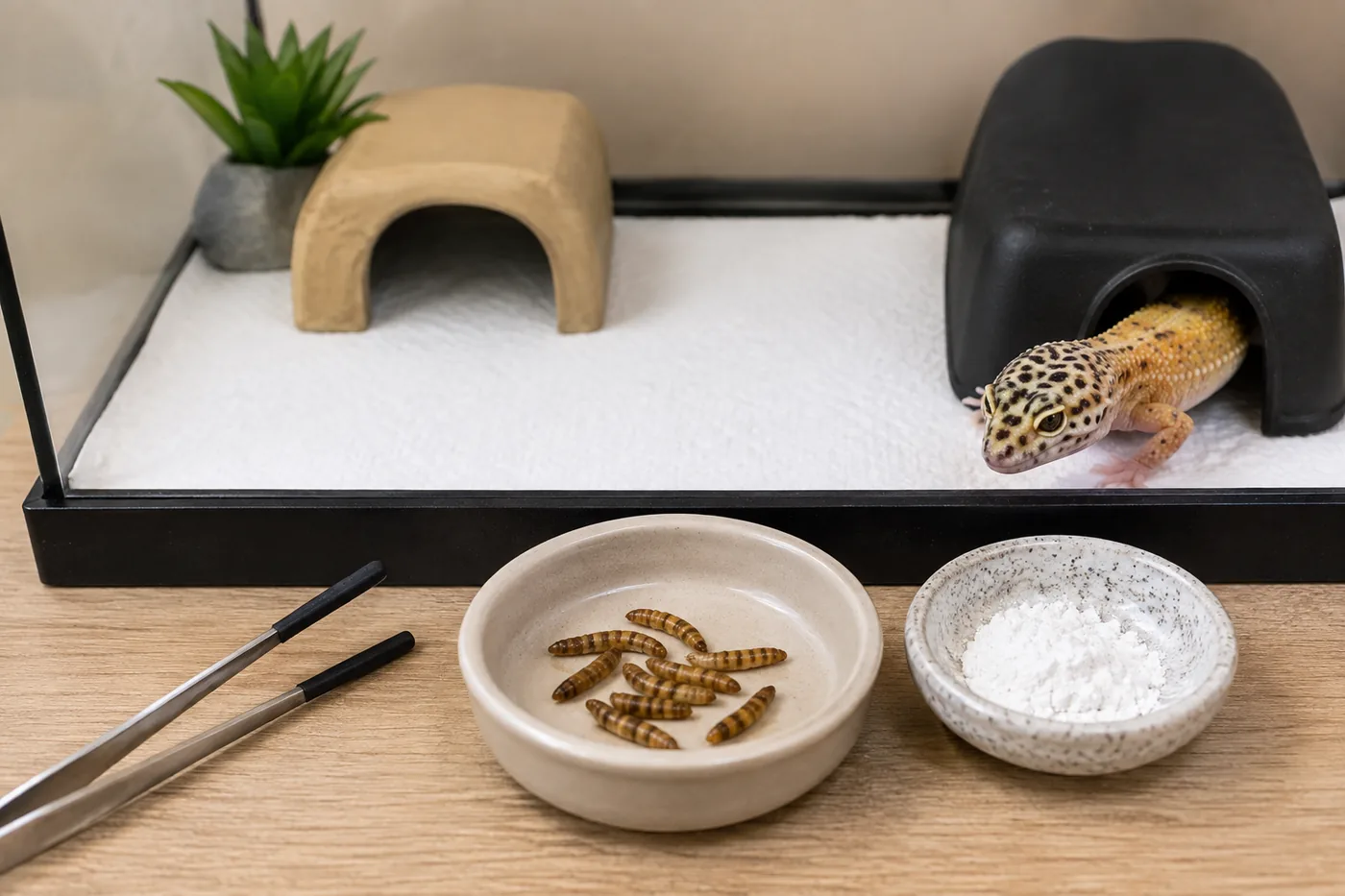
Leopard gecko food sounds simple because the animal eats insects, but the details matter. A good diet is not only a list of bugs. It is feeder size, feeder variety, gut-loading, calcium, vitamins, feeding frequency, removal of uneaten insects, and body-condition tracking. A gecko can look eager at feeding time and still become overweight or nutritionally imbalanced if every meal is the same convenient insect.
The safest beginner approach is a controlled feeding routine. Use appropriately sized insects, prepare them before feeding, dust them when needed, and watch whether the gecko actually eats. Feeding from a dish or with tongs can reduce accidental substrate ingestion and makes appetite easier to track, especially during quarantine or the first month.
Crickets are common and encourage hunting, but they should not be left loose in the enclosure because they can stress or bite reptiles. Dubia roaches are a strong staple where legal because they are easy to gut-load and less jumpy. Mealworms are convenient and easy to dish-feed, but they should not be the only insect for every animal. Black soldier fly larvae, silkworms, hornworms, and occasional waxworms may fit specific needs, availability, or variety plans. Treat very fatty feeders as occasional tools, not the backbone of the diet.
Gut-loading means giving feeder insects nutritious food before they become the gecko’s meal. This matters because the insect carries nutrients into the reptile. Use safe leafy greens, vegetables, grains, or commercial gut-load products appropriate for the feeder species, then offer insects while they are still in good condition. Do not keep feeders on poor food for weeks and expect dusting powder to fix everything at the last second.
Plain calcium, calcium with vitamin D3, and reptile multivitamins are not interchangeable. Calcium supports bones and muscle function. D3 helps calcium metabolism but must be balanced with UVB exposure and the animal’s needs. Multivitamins cover nutrients that a narrow insect rotation may miss. Juveniles, breeding females, rescues, and animals without UVB may need different schedules. Use a published schedule from a reputable care source or veterinarian, then adjust with professional guidance if the animal shows tremors, weakness, jaw softness, poor growth, or repeated appetite problems.
Young leopard geckos usually need more frequent meals than adults because they are growing. Adults often do better with measured meals a few times per week rather than constant feeding. Exact frequency depends on age, body condition, season, health, temperature, and the feeder type. If the gecko is gaining excess fat, reduce portions and review feeder choice. If the tail is thinning, appetite is poor, or weight drops, review temperature, stress, parasites, and veterinary care instead of only offering more insects.
Leopard geckos eat live feeder insects. They do not need fruit, vegetables, seed mixes, pellets, or table scraps as a normal diet. A useful food list starts with safe insects such as appropriately sized crickets, dubia roaches where legal, mealworms, black soldier fly larvae, silkworms, and occasional high-moisture or high-fat feeders used with restraint. The list is only half the answer; the insects still need gut-loading, correct size, and a supplement plan.
Treats should stay occasional. Waxworms and similar rich feeders can help in limited situations, but they can also train a gecko to hold out for fatty food. If you are asking what to feed a leopard gecko every week, think rotation and body condition rather than one favorite bug. If you are asking what to feed today because the gecko stopped eating, check temperatures, shed cycle, recent stress, stool, and weight before turning the meal plan into a guessing game.
Crickets are active and widely sold, which makes them useful for keepers whose geckos respond to movement. They also escape easily, make noise, and should be removed if uneaten. Dubia roaches are cleaner and easier to contain for many households, but they are not legal everywhere and some keepers dislike storing them. Mealworms are easy to keep and dish-feed, but a gecko that eats only mealworms may miss the benefits of a broader rotation.
Black soldier fly larvae can be helpful variety, especially when a keeper wants a softer-bodied feeder, but many leopard geckos have strong preferences. Hornworms add moisture and can tempt a reluctant feeder, yet they grow quickly and should not become the everyday staple. Waxworms are best treated like rich treats because geckos may prefer them too much and ignore better staples. The best feeder is rarely one insect forever; it is the rotation your gecko eats reliably while maintaining good body condition.
A juvenile feeding plan is built around growth, so meals are usually more frequent and calcium planning is especially important. An adult plan is built around maintenance. Adults can become overweight if every enthusiastic feeding response is treated as hunger. Older geckos may need easier access, closer weight tracking, and faster veterinary attention when appetite changes. The feeding schedule should follow the animal in front of you, not a rigid chart that ignores body condition.
Seasonal changes can also affect appetite. Some geckos slow down during cooler or shorter-day periods even in captivity. That does not mean every food refusal is harmless. Compare appetite with weight, temperature logs, shed cycle, stool, and behavior. A stable adult that skips a meal during shed is different from a thin gecko that refuses food for weeks. When appetite changes and weight drops, involve a reptile veterinarian.
Use insects that are appropriately sized for the gecko. Oversized prey can be difficult to swallow and digest, while tiny prey can make feeding inefficient. A practical meal should leave the gecko satisfied without creating a pile of loose insects. Remove uneaten feeders after the session. If you feed in a dish, clean the dish often. If you tong-feed, keep the session calm and avoid turning the tongs into something the gecko strikes aggressively every time the enclosure opens.
A leopard gecko that refuses food may not be picky. It may be too cool, stressed, shedding, newly moved, overfed, ill, or reacting to enclosure changes. Before changing every feeder at once, check the warm side, cool side, probe placement, and whether the gecko has enough cover. The temperature guide is part of the feeding plan because digestion depends on safe heat. The beginner guide can help separate normal settling-in behavior from avoidable first-month mistakes.
Tail shape, body outline, weight trend, and behavior tell you more than appetite alone. A healthy tail is usually full without looking inflated. The body should not look bony, but fat deposits and a heavy belly are also warning signs. Weigh the gecko monthly on a gram scale and write down feeder type, meal size, shed dates, and unusual behavior. Records turn “I think it eats fine” into evidence you can use if a veterinarian needs to help.
Keep feeder care separate from reptile care. Store insects in clean containers, feed the insects well, remove spoiled food, and avoid using household pesticide areas for storage. On feeding day, prepare only the amount you expect to offer, dust as needed, and return unused insects to the feeder container only when they have not been contaminated. Wash feeding dishes and tongs so old powder, waste, and insect parts do not build up.
Make the routine repeatable for anyone who helps you. A short note near the enclosure can list feeder type, approximate portion, supplement day, and what to do with uneaten insects. This prevents the common problem where a pet sitter overfeeds, skips calcium, leaves crickets loose, or turns off heat during cleaning. Simple written routines protect the animal when the main keeper is busy or away.
No, fruit should not be used as normal food for leopard geckos. They are insectivores.
Mealworms can be part of the diet, but a varied feeder rotation is safer than relying on one insect forever.
Yes, calcium planning is a normal part of leopard gecko care. The exact schedule depends on age, UVB, and health.
Common reasons include relocation stress, shedding, low temperatures, overfeeding, illness, or seasonal changes. Measure the enclosure before guessing.
These pages are written from common husbandry practice and cross-checked against veterinary, welfare, and specialist reptile-care references. Start with these sources when confirming a care decision.